
Financial literacy is important anywhere in the world. However, managing money in Europe can involve a unique set of challenges.
Europe is not one single financial system. Different countries have different tax rules, salaries, housing markets, pension systems, banking practices, and costs of living. At the same time, many European countries share the euro, making it easier to move, travel, work, and spend across borders.
Because of this, financial literacy in Europe is not simply about learning how to budget.
It is also about understanding how the financial environment around you works.
Whether you live in Germany, France, Spain, Italy, Portugal, the Netherlands, Ireland, or another European country, understanding your local financial system can help you make more informed decisions about your money.
What Does Financial Literacy Mean in Europe?
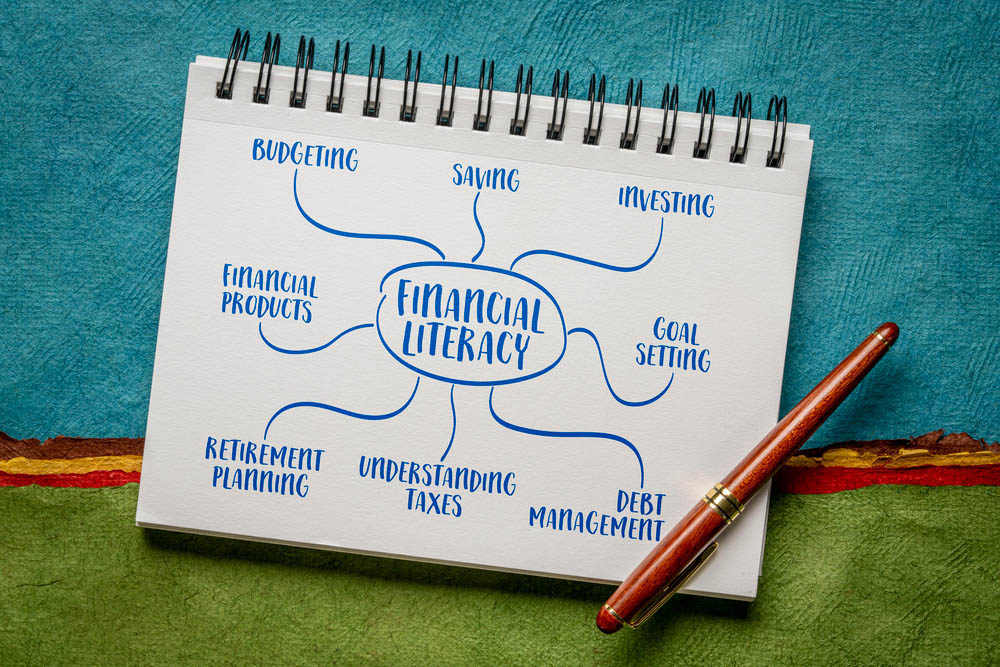
Financial literacy means having the knowledge and confidence to make informed financial decisions.
In a European context, this can include understanding:
- Personal budgeting
- Taxes and social contributions
- Credit and loans
- Savings accounts
- Investments
- Pensions
- Insurance
- Housing costs
- Inflation
- Currency exchange
- Cross-border banking
- Financial risks
However, there is an important detail.
The right financial decision in one European country may not necessarily be the right decision in another.
For example, taxation, pension contributions, mortgage rules, and investment options can vary significantly from country to country.
Therefore, financial literacy requires both general financial knowledge and an understanding of your local environment.
Europe Is Financially Diverse
One of the biggest mistakes someone can make when thinking about European finances is assuming that every European has the same financial reality.
A person living in London faces a very different housing market from someone living in Lisbon.
Someone working in Switzerland has a different salary and tax environment from someone working in Spain.
A family living in Germany may have different social benefits and pension arrangements from a family living in Italy.
Even when two countries use the same currency, their financial realities can be very different.
As a result, financial literacy starts with understanding where you live.
The Euro Makes Some Things Easier
For people living in the euro area, using the same currency across multiple countries can make everyday financial life more convenient.
Traveling from France to Italy, for example, does not require exchanging euros into another local currency.
This can make cross-border travel and spending easier.
However, the fact that countries use the same currency does not mean that prices, salaries, taxes, or living costs are the same.
A €50 purchase has the same nominal value in different euro-area countries, but its impact on a person’s budget can be very different depending on income and local prices.
Therefore, financial literacy means looking beyond the currency symbol.
Your Salary Is Not the Same as Your Financial Reality
One of the most important concepts in personal finance is understanding the difference between gross income and disposable income.
A salary advertised as €40,000 per year does not necessarily mean that the person has €40,000 available to spend.
Taxes, social contributions, pension contributions, healthcare-related costs, and other deductions can affect the amount that actually reaches a person’s bank account.
For this reason, when comparing jobs or countries, it is important to look beyond the headline salary.
Ask:
How much will I actually receive after taxes and contributions?
How much does housing cost?
How much will transportation cost?
What benefits are included?
How much can I realistically save each month?
These questions provide a much clearer picture of financial well-being.
Cost of Living Matters More Than a Salary Number
A higher salary does not automatically mean a better financial situation.
Imagine two people.
One earns €3,000 per month but spends €1,400 on housing.
Another earns €2,500 but spends €700 on housing.
The person with the lower salary may have more money available after essential expenses.
This is why cost of living is an important part of financial literacy.
When comparing European cities or considering moving to another country, look at housing, food, transportation, utilities, healthcare, taxes, and other recurring expenses.
The question should not simply be:
“Where can I earn more?”
It should be:
“Where can my income support the lifestyle and financial goals I want?”
Housing Can Change Your Entire Financial Plan
Housing is often one of the largest expenses in a household budget.
Rent or mortgage payments can determine how much money remains for savings, investments, travel, and everyday spending.
Therefore, understanding the housing market where you live is an important part of financial literacy.
Before renting or buying, consider more than the monthly payment.
Think about:
- Utilities
- Insurance
- Maintenance
- Property taxes where applicable
- Transportation from the property
- Deposit requirements
- Mortgage interest
- Long-term affordability
A home that looks affordable based only on the monthly rent or mortgage may become much more expensive once all associated costs are included.
Learn How Taxes Work in Your Country
Taxes are another essential part of European financial literacy.
Tax systems differ across Europe, and the rules can become particularly important if you work remotely, operate a business, invest, or live in one country while earning income from another.
You do not necessarily need to become a tax expert.
However, you should understand the basics of your own situation.
Know which taxes affect your income.
Understand whether you have obligations related to investments or other sources of income.
If your financial situation becomes complicated, professional tax advice may be appropriate.
The important point is not to ignore taxes simply because they seem complicated.
Saving Money in Europe: Where Should You Start?
Saving is one of the simplest financial habits, but it can also be difficult when living costs are high.
Start with a specific purpose.
Instead of saying:
“I need to save more.”
Try:
“I want to build a €3,000 emergency fund.”
Or:
“I want to save €5,000 for a trip.”
Or:
“I want to have enough money to cover three months of essential expenses.”
Specific goals make saving easier to understand and measure.
Furthermore, separating savings from everyday spending can reduce the temptation to use that money for unnecessary purchases.
Emergency Savings Are Important
Unexpected expenses do not care whether the economy is doing well.
A car can break down.
A job can change.
A major household expense can appear.
An unexpected bill can disrupt an otherwise stable budget.
For that reason, having accessible savings can provide financial flexibility.
The appropriate amount depends on your personal situation, including income stability, household responsibilities, debt, and monthly expenses.
Nevertheless, the principle remains useful:
Not every euro you earn should be immediately committed to spending.
Some money should remain available for the unexpected.
Credit Cards Are Not Free Money
Credit cards can be useful financial tools, but they can also create problems when they are misunderstood.
The most important thing to remember is simple:
A credit limit is not a spending budget.
If a bank gives you a €5,000 credit limit, that does not mean you should spend €5,000.
Before using credit, understand the interest rate, fees, repayment conditions, and consequences of carrying a balance.
In addition, compare credit products carefully instead of choosing one simply because it offers rewards or a high spending limit.
Investing Requires Financial Literacy Too
Investing can become an important part of long-term financial planning.
However, investing without understanding what you are buying can create unnecessary risks.
Before investing, ask:
What exactly am I buying?
How can I make or lose money?
What fees will I pay?
How long do I expect to keep the investment?
How much volatility can I tolerate?
How does this investment fit into my overall financial plan?
These questions are more important than simply asking which investment has produced the highest return recently.
Understand Diversification
Diversification is another important concept for European investors.
Instead of putting all your money into one company, one asset, one country, or one sector, diversification can spread exposure across different investments.
For example, an investor may have exposure to companies from several countries rather than relying entirely on the economy of the country where they live.
However, diversification does not eliminate investment risk.
Markets can fall, investments can lose value, and economic conditions can change.
Therefore, diversification should be understood as a risk-management principle, not a guarantee of profit.
Retirement Looks Different Across Europe
Retirement planning is particularly interesting in Europe because pension systems vary considerably.
Many European countries have public pension systems, while workers may also have occupational or private pension arrangements.
Because of these differences, someone moving between European countries should understand how their pension contributions and future benefits are affected.
Do not assume that working in several countries automatically means your retirement planning will work the same way everywhere.
Instead, learn how the relevant pension systems interact with your employment history and residence.
Moving to Another European Country Changes Your Financial Plan
Europe makes international mobility relatively accessible for many people, but moving from one country to another still requires financial planning.
Before relocating, research:
Housing costs
Taxes
Healthcare
Transportation
Banking
Employment conditions
Pension contributions
Currency requirements
Insurance
Emergency savings
In addition, give yourself a financial buffer.
Moving can involve deposits, transportation, furniture, documentation, temporary accommodation, and unexpected expenses.
A move that looks affordable on paper can become much more expensive during the first few months.
What If You Work in One Country and Live in Another?
Cross-border work can make financial decisions more complicated.
You may have income connected to one country, residence in another, and financial accounts somewhere else.
In these situations, tax residency and local rules can become particularly important.
Therefore, do not assume that the rules you learned in your home country automatically apply.
When cross-border finances become significant, professional advice can help you understand your obligations.
Currency Exchange Is Also Part of Financial Literacy
Not every European country uses the euro.
Countries such as the United Kingdom and Switzerland, for example, use different currencies.
That means exchange rates can become relevant when you travel, work, invest, or transfer money internationally.
Suppose you earn money in pounds but regularly spend in euros.
Changes in the GBP/EUR exchange rate can affect how much your income is worth when converted.
Similarly, someone earning in euros and spending in another currency needs to consider exchange rates and transaction costs.
Therefore, international financial literacy includes understanding currency risk.
Don’t Ignore Bank Fees
Banking can appear free until small charges accumulate.
Depending on your country and account, you may encounter fees related to transfers, international transactions, cash withdrawals, currency conversion, overdrafts, or premium services.
Review your bank statements regularly.
Ask yourself:
What am I actually paying my bank for?
If you do not understand a fee, investigate it.
Sometimes a cheaper account or different banking option may provide the same essential services.
Financial Literacy Can Make Travel Smarter
Europeans often have access to many countries within relatively short distances.
That makes travel attractive, but frequent travel can also become a significant expense.
A financially literate traveler considers the entire cost of a trip.
That includes transportation, accommodation, food, attractions, insurance, currency conversion, and unexpected expenses.
Instead of simply asking whether you can afford the flight, calculate the total cost of the experience.
This can help prevent a cheap flight from becoming an expensive vacation.
Try This European Financial Literacy Check
Take five minutes and answer these questions:
Where does most of my income go each month?
How much do I spend on housing?
How much do I save?
What interest am I paying on debt?
Do I understand my country’s basic tax system?
Do I know how my pension works?
How much money would I need if my income stopped temporarily?
Do I understand the investments I currently own?
Do I pay fees for banking or currency exchange?
If I moved to another European country, would I know which financial rules I would need to research?
If you cannot answer some of these questions, that is not a problem.
Instead, you have identified your next financial education topic.
A Simple European Financial Literacy Routine
You do not need to spend hours studying finance every week.
Try a simple monthly routine.
Week One: Review Your Spending
Look at your bank and card statements.
Identify where your money went.
Week Two: Review Your Savings
Check whether you are moving toward your emergency fund and other financial goals.
Week Three: Learn One Financial Concept
Choose something relevant to your situation, such as taxes, pensions, investing, credit, or insurance.
Week Four: Review Your Long-Term Goals
Ask whether your current spending and saving habits are moving you closer to the future you want.
Then repeat the process the following month.
Over time, this routine can turn financial literacy into a practical habit rather than something you only think about when there is a financial problem.
Financial Literacy Is About Making Your Money Work Across Borders
One of Europe’s interesting financial characteristics is its diversity.
You can live in one country, work for a company based in another, travel regularly to a third, invest internationally, and use financial services that operate across borders.
Because of this, financial literacy has become more than knowing how to create a monthly budget.
It means understanding how different financial systems interact with your personal situation.
You do not need to become an expert in every European country’s financial regulations.
Instead, you need to know when a general financial principle applies and when local rules require more research.
The Goal Is Financial Freedom, Not Financial Perfection
Financial literacy is not about making every decision perfectly.
You may overspend sometimes.
You may choose the wrong financial product.
You may have a month when saving is difficult.
You may make an investment decision that you later reconsider.
What matters is learning from those experiences.
Ultimately, financial literacy gives you something more valuable than a perfect spreadsheet.
It gives you greater awareness.
You begin to understand where your money goes, what your financial decisions cost, what risks you are taking, and what options you have.
And in a continent as financially diverse as Europe, that knowledge can make a meaningful difference.
Start With One Financial Question Today
You do not need to understand the entire European financial system today.
Start with one question.
Do I know exactly where my money goes every month?
If the answer is no, start there.
Then learn about savings.
Then credit.
Then taxes.
Then pensions.
Then investing.
Little by little, financial concepts become less intimidating.
And ultimately, financial literacy is not about knowing everything.
It is about knowing enough to ask better questions, recognize financial risks, make informed decisions, and build a future that matches the life you want to live.